
How Big Do You Want to Build?
Before You Write Chapter One, Decide What Neighborhood You're Building In


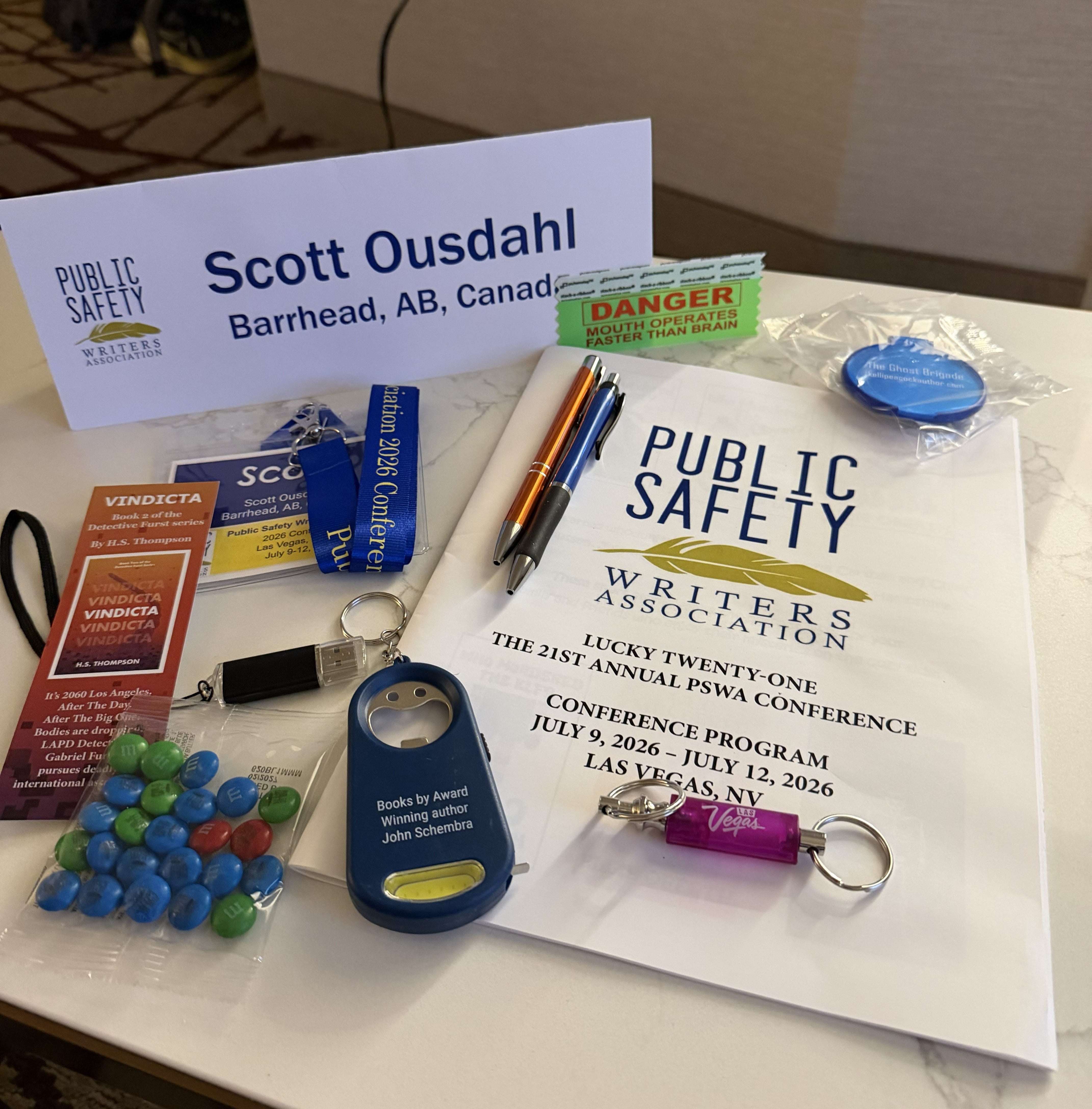
A few weeks ago, while attending the Public Safety Writers Association conference in Las Vegas, I found myself sitting quietly between sessions, reflecting on the twenty-year journey Court of Equalization has taken to get where it is today. It wasn’t one of the keynote presentations or a conversation over coffee that sparked the thought. It was simply a quiet moment to look back at where this manuscript started, where it is today, and everything that happened in between.
For the first time, I realized I’d been looking at the journey the wrong way.
For years, I thought I was trying to write a better novel. Sitting there in Las Vegas, it suddenly occurred to me that maybe the novel had been doing something else entirely.
The journey has been teaching me how to become a better writer.
Like most first-time authors, I didn’t start with a publishing plan. I wasn’t thinking about agents, publishers or market expectations. I certainly wasn’t thinking about manuscript length. I simply had a story I couldn’t stop thinking about, and every morning before work I’d pour myself a cup of coffee, sit down at the keyboard and spend an hour with my characters while most of the world was still waking up.
Those mornings quickly became my favourite part of the day. Before work, before responsibilities, before life got busy, there was always that quiet hour where the only thing that mattered was the next page. Looking back, I think that’s when writing quietly stopped being something I wanted to do and became part of who I was.
Just over a year later, I typed the two words every writer dreams about.
The End.
It felt incredible.
Then I looked at the word count. Approximately 170,000 words.
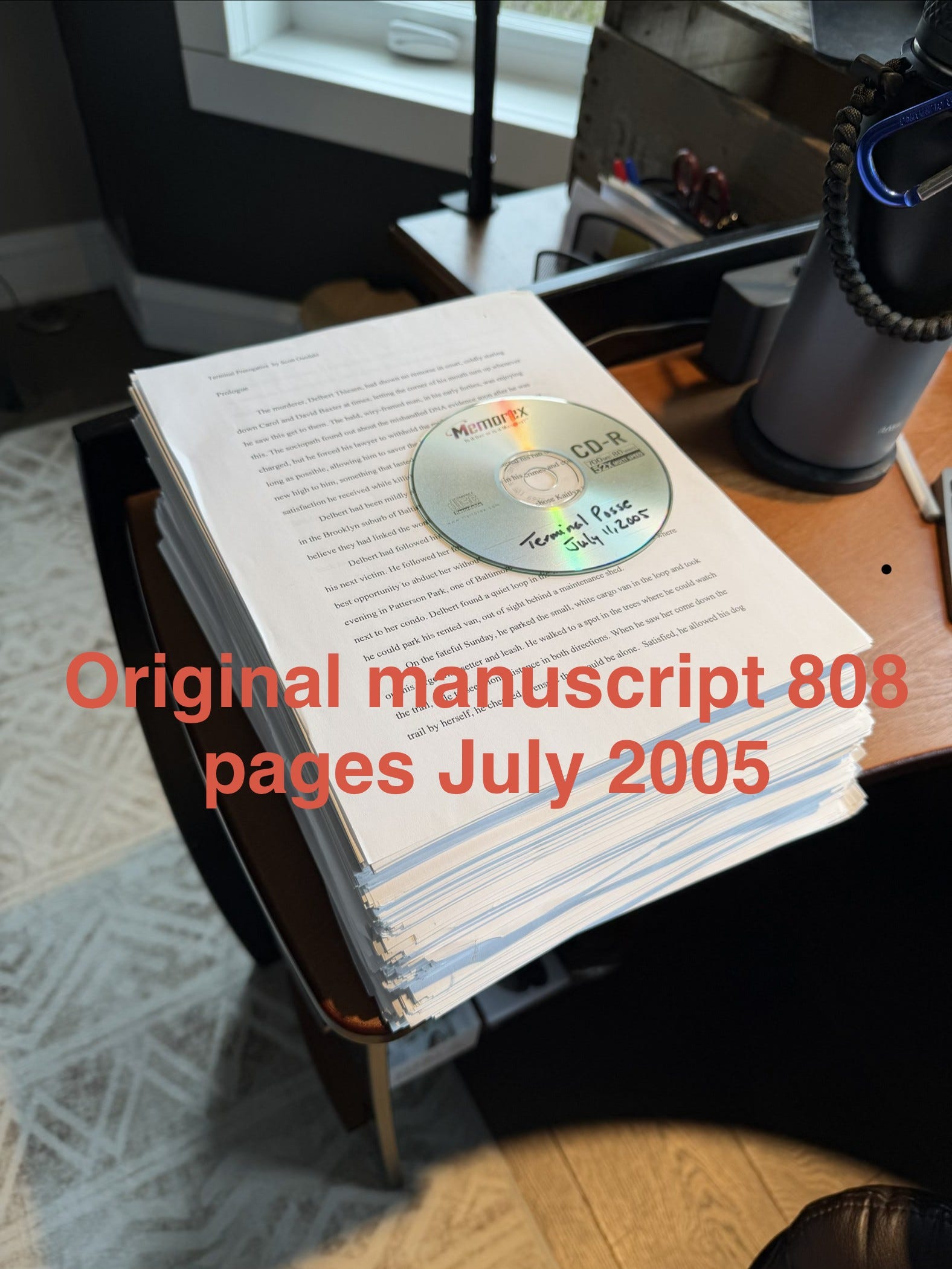
At the time, I honestly had no idea whether that was reasonable or not. I didn’t know there were typical manuscript lengths for different genres, and I certainly didn’t understand why agents and publishers cared so much about them. I wasn’t ignoring the rules. The truth is that I didn’t even know they existed. More importantly, I didn’t know where to find that kind of guidance.
Ironically, the story itself wasn’t the problem.
Not long after finishing that first draft, I signed with a literary agent who fell in love with the story and the characters. As a first-time novelist, that was an incredible vote of confidence. Looking back, though, I wish we’d spent more time talking about where the manuscript fit within the publishing industry and what readers typically expected from a debut legal thriller. After a couple of years with no publishing offers, I cancelled the contract with my agent.
I found myself spending the next several years trying to reshape a novel that had never really been designed with those expectations in mind. At the time, I thought I was fixing mistakes.
Today, I see it differently.
Every revision forced me to become a better storyteller. Every scene I cut made me think more carefully about pacing. Every subplot I removed taught me something about structure. Every conversation with a beta reader helped me experience the story through someone else’s eyes.
Little by little, I stopped thinking about finishing a manuscript and started thinking about how stories actually work. Over the next several years, I gradually worked the novel down to around 100,000 words. It wasn’t easy. Favourite scenes disappeared. Characters were combined. Dialogue became tighter. Entire backstories found their way into a folder I jokingly named “Maybe Someday.”
Then something interesting happened. Several beta readers commented that the pacing had improved considerably, but they also felt like something had been lost along the way. The story moved faster, but parts of the world no longer felt quite as rich as they once had. In my effort to remove unnecessary words, I’d also removed some of the atmosphere that allowed readers to settle into the story.
That was an important lesson. Editing isn’t really about making a manuscript shorter. It’s about deciding which words deserve to stay.
That became even clearer when I sent the 109,000-word version of Court of Equalization to editor Saoirse Temple in Grande Prairie for a thorough edit. After working through her recommendations, something unexpected happened. Instead of getting shorter, the manuscript grew to approximately 111,000 words.
Those additions weren’t filler. They strengthened character development, clarified motivations and restored some of the colour earlier drafts had sacrificed in the pursuit of a lower word count. Not long afterward, that version earned a Silver Medallion from the Public Safety Writers Association.
The award meant a great deal to me, but probably not for the reason you might expect.
It wasn’t validation that I’d finally “got the book right.” It was reassurance that the journey itself had value and I was on the write track. I wasn’t simply rewriting the same novel over and over again.
As I sat there in Las Vegas thinking about everything that manuscript had taught me over the past twenty years, another realization slowly began to take shape.
For years, I’d convinced myself the problem was the manuscript. Every revision seemed to revolve around the same question. What could I cut next? I’d trim a scene, tighten some dialogue or remove another subplot, hoping I was one revision away from finally getting it right. But somewhere between conference sessions, I found myself asking a completely different question.
What if I’d been trying to solve the wrong problem all along? The more I thought about it, the more obvious it became. Maybe Court of Equalization had never really wanted to be one book.
It wasn’t a lightning bolt or some dramatic moment of inspiration. It was more like looking at one of those optical illusions where all of a sudden, your eyes see something that had been there the entire time. Once I saw it, I couldn’t unsee it.
Almost immediately, I could picture where the story naturally wanted to divide. The break didn’t feel forced. It didn’t require inventing a new plot or manufacturing a cliffhanger. It simply felt...right.
Of course, every solution creates another challenge.
Splitting the manuscript left me with two novels of roughly 55,000 words each. That’s still shorter than the legal thrillers I enjoy reading and hope to write someday. Then I started thinking about everything that had disappeared over the years.
I’d removed nearly 70,000 words from that original manuscript. Some of them were scenes I genuinely missed. Others were character moments that revealed personality, bits of backstory that helped explain motivation, and environmental description that gave readers a chance to settle into the world. At the time, every one of those cuts felt necessary.
Now I wasn’t so sure. Maybe those scenes hadn’t failed. Maybe they just belonged in a different place.
When I got home, I opened the folder where I’d been saving those deleted scenes. Instead of asking whether they deserved to come back, I found myself asking a different question. Which story were they always meant to be part of?
That simple shift changed the entire project. For the first time in years, I wasn’t looking for more words to cut. I was looking for the right place to let the story breathe. As I thought about it, I couldn’t help comparing the whole process to building our house. Long before we ever poured the foundation, we had already answered one important question.
How big did we want to build?
Once we knew that, the rest of the decisions became easier. We still changed things along the way. We moved walls, redesigned rooms and came up with ideas we hadn’t thought of when we first drew the plans. But we were always working within a blueprint that gave the project direction.
If I’d understood manuscript expectations twenty years ago, I probably would have approached the structure of Court of Equalization with a different plan . I don’t think I would have told a new story, but I almost certainly would have built it in stages.
If you’re just beginning your first manuscript, this is one of those things that’s worth spending a few minutes researching before you write Chapter One. Every genre has developed its own general expectations over time. They’re not hard rules, and there will always be successful exceptions, but they’re helpful guideposts that can save you a tremendous amount of work later.
A Blueprint Before You Build
Before you pour the foundation, it helps to know roughly what the finished house is expected to look like. These aren’t building codes, and they’re certainly not creative limits. Think of them as the kinds of homes already standing in the neighbourhood you are going to build in.
Genre
Typical Word Count
Thriller / Crime
80,000–100,000
Legal Thriller
85,000–110,000
Mystery
70,000–90,000
Romance
70,000–90,000
Romantic Comedy
70,000–90,000
Literary Fiction
80,000–110,000
Historical Fiction
90,000–120,000
Science Fiction
90,000–120,000
Fantasy
100,000–130,000
Paranormal
80,000–100,000
Horror
70,000–100,000
Western
60,000–90,000
Memoir
60,000–90,000
Biography
80,000–120,000
General Non-fiction
50,000–80,000
Business / Self-help
40,000–70,000
True Crime
70,000–100,000
Young Adult
60,000–90,000
Middle Grade
30,000–55,000
Those word counts are helpful. They can save you a tremendous amount of work, and I wish I’d known about them before I started writing Court of Equalization. But they’re still guideposts, not guarantees. If your story genuinely needs another few thousand words to give readers a richer experience, give it those words. If cutting a few thousand makes the story stronger, don’t be afraid to sharpen your pencil.
Looking back now, I wouldn’t trade the past twenty years for anything.
When I started writing, it was almost entirely a solitary pursuit. I rarely attended conferences, I wasn’t involved in writing groups, and I didn’t spend much time connecting with other authors. I thought that’s just what writers did. You sat down at your keyboard, figured things out for yourself and hoped you were heading in the right direction.
I didn’t realize what I was missing.
Today, some of the most valuable parts of this journey have very little to do with the hours I spend writing. They’ve happened in conversations between conference sessions, over coffee with other authors, through interviews for Destination Write, and in emails from readers who simply wanted to share where they were on their own writing journey. Somewhere along the way, I found my community.
I never imagined it would introduce me to so many generous people who were willing to share what they’d learned, encourage someone a little farther behind them and celebrate each other’s successes along the way. We all have different stories to tell, but we’re travelling many of the same roads. When someone who’s a little farther ahead reaches back to help the next writer in line, the entire community gets stronger.
I think that’s one of the reasons Destination Write has become so important to me.
It was never meant to be a place where I tell people how to write. It’s simply a place where I can share what I’m learning, introduce you to people who know far more than I do, and hopefully make the road a little less lonely for the next writer.
If something I’ve learned helps someone avoid a few years of unnecessary frustration, that’s wonderful. If one of my guests shares an idea that changes the way someone approaches their manuscript, even better.
And if all we do is remind each other that every writer—even the successful ones—is still learning, then I think we’re accomplishing something worthwhile.
Twenty years after typing the first words of Court of Equalization, I finally understand something I couldn’t have appreciated back then.
I thought I was building a book.
What I was really building was the writer who would eventually be able to finish it and more importantly understand that I’m still under construction.
Build your network. Build your story.