
Why New Writers Need To Put Their Gloves On
Every build needs an inspection, but not everyone is ready for the report

I’ve spent enough time around construction sites to know one thing for certain: nobody really enjoys inspections. Not the homeowner, not the contractor, and definitely not the tradespeople waiting for approval to move forward. Inspections slow things down. They expose mistakes. They force uncomfortable conversations. And sometimes, they reveal problems nobody wanted to admit were there in the first place.
But inspections exist for a reason.
A house can look beautiful on the surface and still have major structural problems hidden underneath. Weak framing can be concealed with trim. Poor wiring can sit quietly behind finished walls for years before causing damage. Plumbing mistakes can remain invisible until water finally finds its way through the ceiling months later. An experienced builder understands that appearances are never enough. You don’t simply trust that everything behind the walls was done correctly. You bring in outside eyes to inspect the work before the project moves forward.
Writing works exactly the same way.
A manuscript can feel brilliant inside the mind of the writer who created it. The dialogue sounds sharp. The pacing feels exciting. The emotional moments land exactly the way we imagined they would. But once another reader steps into the story, they often notice things we can’t see ourselves. They notice weak character motivations, confusing transitions, inconsistent pacing, or scenes that feel important to the writer but unnecessary to the reader. And hearing those things can be painful, especially in the early stages of writing.
I think part of the reason it hurts so much is because writers spend so much time alone with their stories. A carpenter expects inspections from the very beginning of a build. A writer, on the other hand, might spend months — sometimes years — working on a manuscript before another person ever reads a single page. By the time feedback finally arrives, the story no longer feels like just a project. It feels personal. We fall in love with our characters. We become emotionally attached to scenes, dialogue, and moments we worked incredibly hard to create. So when someone points out that a beloved character isn’t contributing enough to the story, or says a scene we loved is slowing the pacing down, it can feel less like an inspection and more like an attack.
But experienced builders understand something newer builders eventually learn: inspections are not there to destroy the project. They’re there to strengthen it.
The same is true for writers.
If all we ever seek is praise, our manuscripts will never become structurally sound. At some point, we need people willing to tell us where readers got lost, where the emotional foundation feels weak, or where the story simply stopped working. We need fresh eyes that can spot the problems we’ve become too close to see ourselves.
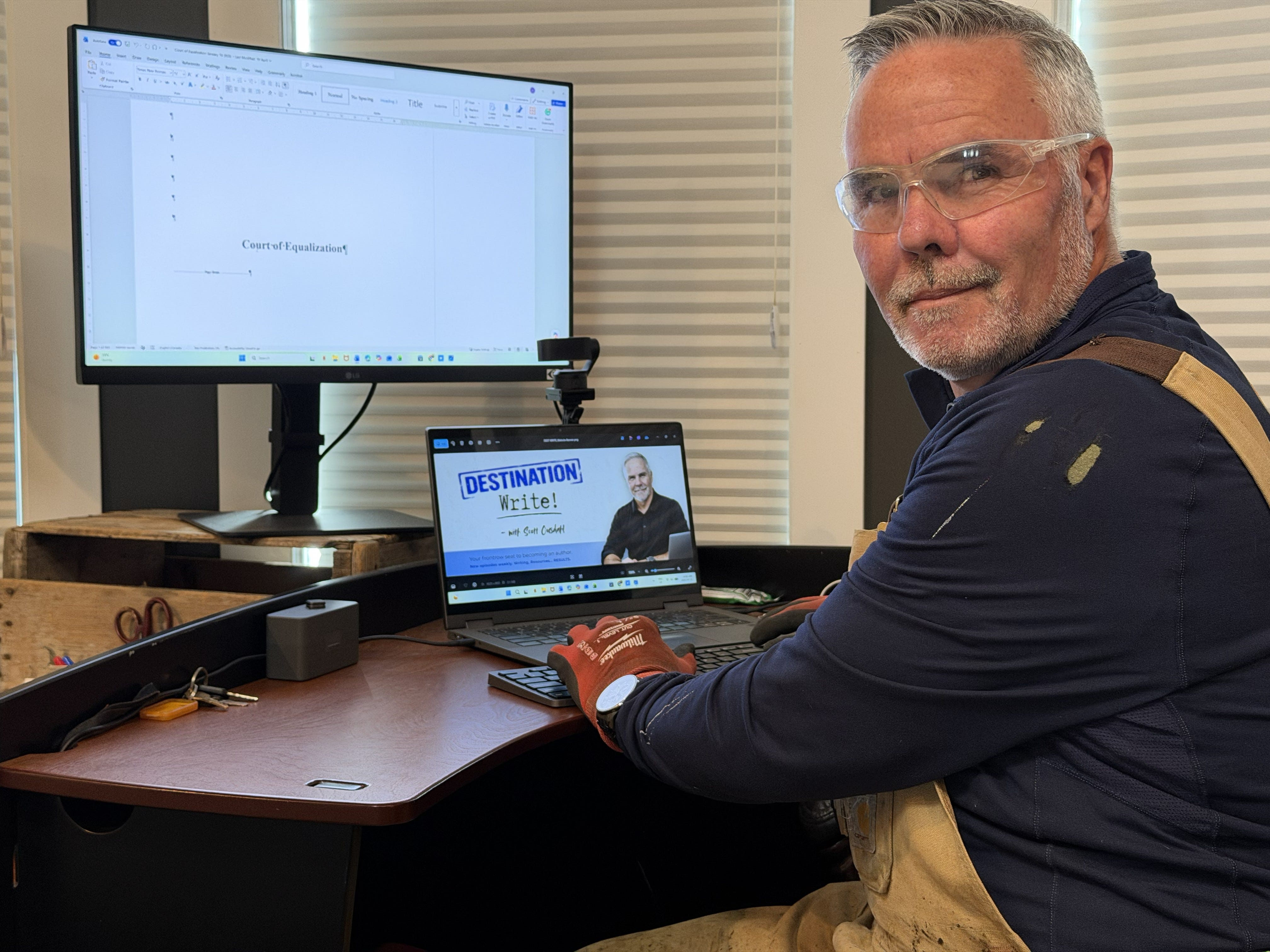
That kind of feedback requires something every builder eventually learns to wear: protective gear.
On a construction site, gloves are not optional for very long. Eventually you’re going to handle rough material, sharp edges, splintered wood, or abrasive surfaces. Without protection, your hands get torn up quickly. Writers need the same thing emotionally. We call it developing thick skin, but really, it’s just learning how to protect yourself enough to continue building even when the feedback stings.
And sometimes it really does sting.
Readers will occasionally point directly at the scene you were most proud of and tell you it dragged. They may dislike a character you loved writing. Sometimes they’ll identify major flaws you somehow never noticed despite reading the manuscript fifty times yourself. That experience can feel brutal in the moment, but it’s also necessary. No builder becomes skilled by avoiding inspections, and no writer improves by hiding from feedback.
The strongest writers eventually learn how to separate themselves from the draft sitting in front of them. They begin to understand that criticism of the manuscript is not criticism of their worth, intelligence, creativity, or future potential. It’s simply part of the process. Some of the biggest breakthroughs in writing happen immediately after hearing something we didn’t want to hear.
Of course, not all feedback is useful. Some readers misunderstand the genre. Some offer criticism so vague it’s impossible to apply. Others project their own personal preferences onto the story. Friends and family can create a different problem entirely by protecting our feelings instead of telling us the truth. Learning how to evaluate feedback becomes part of the craft itself. Good beta readers explain why something isn’t working. Good critique partners help strengthen the structure without trying to redesign the entire house. And mature writers learn how to listen carefully without losing confidence in their own vision.
That balance takes time to develop.
So does resilience.
Perfectionism has probably killed more manuscripts than bad writing ever will. Some writers stop building entirely after difficult feedback because they never developed the emotional gloves needed to survive inspections. I understand that feeling better than most. I’m currently finishing the fourth rewrite of my first manuscript, and I can honestly say that some of the hardest feedback I received also became some of the most valuable lessons. Had I allowed criticism to defeat me early on, I wouldn’t have grown into a stronger writer because of it.
The goal was never to build the perfect book on the first attempt.
The goal is to keep strengthening the structure.
Every revision reinforces the framework a little more. The storytelling becomes stronger. The emotional foundation becomes more stable. The craftsmanship improves. And eventually, something interesting begins to happen. You stop fearing inspections quite as much. In fact, you start seeking them out, because you realize feedback is no longer standing between you and the book you want to write.
It’s helping you build it.
Destination Write // Embrace Inspections. Build the Book
k